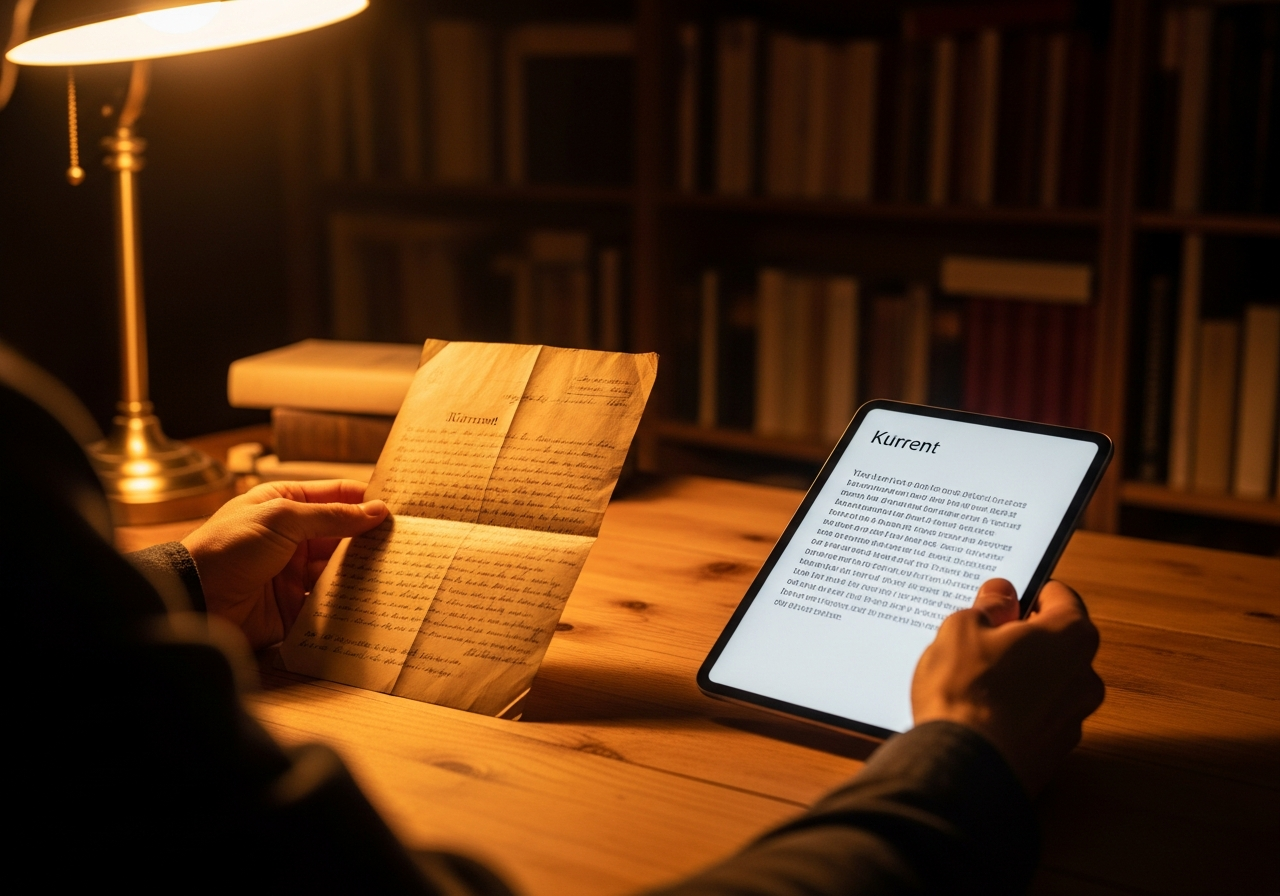
Handwriting to Text — Even the Hard Stuff
Most OCR apps handle tidy notes. We handle the pages they give up on: old letters, faded journals, cramped margins, mixed cursive and print.
Drop a photo of your page here
or click to select — free & no sign-up required
More Than OCR
Optical character recognition treats a page as a bag of shapes. We treat it as a document: the AI reads in context, so names, places, and dates come out right, and unclear words are resolved from the surrounding sentences instead of guessed in isolation. You get three text versions — verbatim, cleaned-up, and interpreted — plus an editor with a magnifier for checking the tricky lines yourself. It's a complete workflow from photo to finished text, not a raw text dump.
What People Convert
Family letters and postcards. A parent's journals. The recipe cards in grandma's tin. War letters from the attic. Old deeds, wills, and meeting minutes. A researcher's field notebooks. If it's handwritten and matters enough to type up, it fits — and because you pay per page with credits that never expire, a one-time box of letters doesn't require a monthly subscription like most handwriting apps charge.
Accuracy, Honestly
No tool reads every page perfectly, and we won't pretend otherwise. That's why the first step is a free AI analysis that grades how readable your page actually is before you spend anything. Most everyday handwriting converts cleanly with AI Instant from $0.20/page. For documents where every word must be right, AI-Verified adds an expert correction pass, and the Expert tier is a full human transcription — even for pages the AI can't crack.
What you'll find — and what our AI can read
- Cursive, print, and mixed writing
- Photos and multi-page PDFs (up to 50 pages)
- Editable output with PDF/TXT/image export
- No subscription — credits that never expire
From handwriting to clear text
Frequently asked questions
How do I convert handwriting to text?
Photograph or scan the page and upload it — photos (JPG/PNG) and multi-page PDFs up to 50 pages work. The AI returns editable text in minutes, which you can refine in the browser and export as text, PDF, images, or audio.
Does it work on messy handwriting?
Usually, yes. The AI reads the whole page in context, so names, dates, and cramped or hurried writing come out far better than with letter-by-letter OCR. The free analysis grades your page's readability honestly before you spend anything.
Does it read both cursive and print?
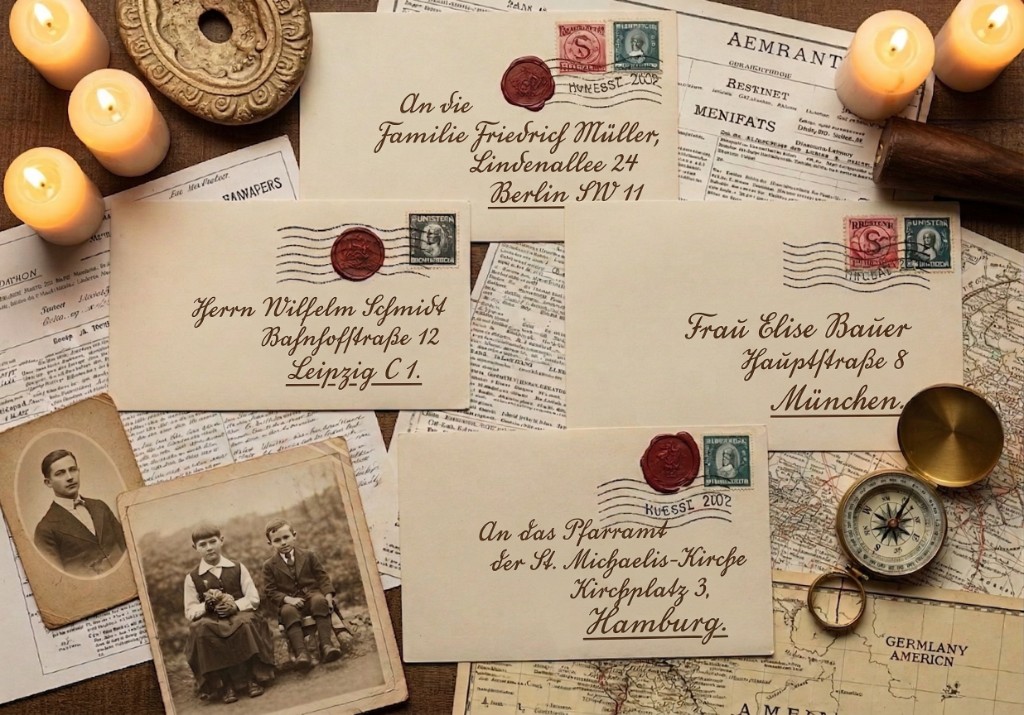
Both — and mixed writing on the same page, which is how most people actually write. It also handles old scripts like Spencerian, Palmer-era cursive, and even German Kurrent.
How is this better than a free OCR app?
Free OCR handles tidy modern notes. This handles the pages OCR gives up on: old, faded, mixed handwriting — with three text versions, a verification magnifier, human experts as backup, and keepsake exports (PDF book, audio). Pay per page, no subscription.
Is there a subscription?
No. You buy page credits (from $4.99) that never expire, and your first page is free. One-time projects — a box of letters, one journal — don't need a monthly plan.
Related articles
Can ChatGPT Read Cursive? We Tested It — Honest Results
We tested general AI chatbots on real old letters: neat 1970s cursive, faded pencil, crossed-out lines, and 1890s script. Where they do fine, where they fail, and what to use instead.
Read articleWhy Your Scan Quality Makes or Breaks AI Transcription (and How to Fix It)
The 6 image problems that reduce AI transcription accuracy — and simple fixes for each. Resolution, lighting, perspective, grid patterns, fading, and compression explained.
Read articleAI or Paleography Expert? Choosing the Right Approach for Your Old German Documents
When does AI transcription deliver great results, and when do you need a human expert? A practical decision framework based on document type, budget, and accuracy needs.
Read articleSame Letter, Different Readings? Understanding How AI Transcription Works
Why uploading the same document twice can produce slightly different text — and why this is actually a feature, not a bug. Technical explanation for genealogists and family researchers.
Read article